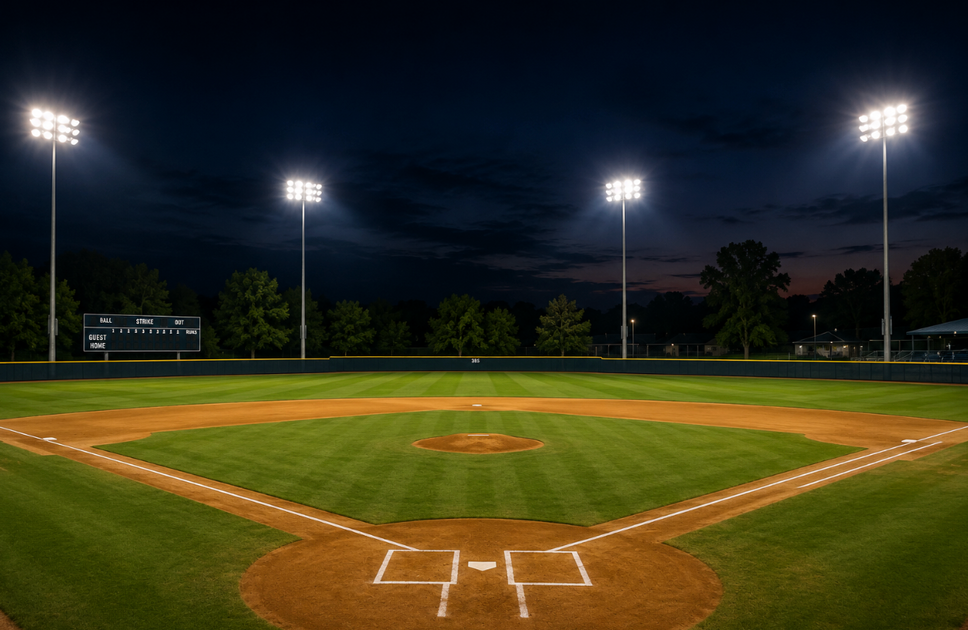
194. How to Choose the Right Baseball Field Lights for Performance & Visibility
By Dani Thomason • Jun 15, 2026
Baseball is a game built on split-second decisions. A center fielder tracking a fly ball against a dark sky. An infielder reacting to a sharply hit ground ball. A batter picking up the spin of a fastball as it leaves the pitcher's hand. In every case, visibility is extremely important.
That's why baseball field lighting is one of the most important investments a facility owner can make. Whether you're designing a youth league complex, upgrading a municipal park, or building a competitive venue, the right baseball field lights can dramatically improve safety, player performance, spectator experience, and facility utilization.
Today's facilities have more options than ever before. Modern LED stadium lights deliver higher efficiency, better visibility, and lower maintenance requirements than traditional technologies. At the same time, advances in optics and controls have made it possible to create more precise, energy-efficient lighting systems that support both recreational and competitive play.
In this guide, the experts at OEO will explore how to choose the right baseball field lighting system, including illumination requirements, fixture selection, pole placement, energy efficiency considerations, and long-term maintenance best practices.
Key Takeaways
- The best baseball field lights provide consistent visibility across the entire playing area, from the infield to the outfield.
- LED stadium lights have become the preferred choice due to their energy efficiency, durability, and superior light quality.
- A professionally designed baseball field lighting system can improve player safety, extend field usage, and reduce long-term operating costs.
The Importance of Baseball Field Lighting
Lighting a baseball field is fundamentally different from lighting many other sports venues.
Unlike a rectangular playing surface, a baseball field contains multiple activity zones with vastly different visibility requirements. The infield, outfield, warning track, dugouts, bullpens, and spectator areas all require varying levels of illumination. Players must track high fly balls, line drives, and fast-moving pitches while maintaining clear sightlines across long distances.
As a result, effective field lighting isn't simply about making the field brighter. It's about creating visibility where players need it most while maintaining uniformity across the entire facility.
Poor lighting can create shadows, uneven visibility, and visual fatigue. These issues not only affect performance but can also increase the risk of player injuries. By contrast, a well-designed lighting system helps players react more quickly, improves spectator viewing conditions, and creates a professional atmosphere that enhances the overall experience.
Understanding Baseball Field Lighting Requirements
The lighting needs of a youth baseball field are very different from those of a collegiate or professional venue.
Recreational facilities typically focus on providing sufficient visibility for safe gameplay, while competitive venues often require significantly higher illumination levels to support advanced play and tournament operations. The size of the field also influences design requirements, as larger outfields require greater fixture output and more strategic pole placement.
Designers must evaluate several factors when planning a baseball field lighting system, including field dimensions, player sightlines, pole locations, and the intended level of competition. The objective is to create consistent field lighting that allows athletes to see clearly regardless of where the action occurs.
Unlike applications such as tennis court lighting, volleyball court lighting, or pickleball court lighting, baseball requires illumination across a much larger and more varied playing surface. This makes planning and fixture selection particularly important.
Why LED Stadium Lights Have Become the Standard
Not long ago, metal halide fixtures dominated baseball stadium lighting. While these systems served facilities well for decades, they are increasingly being replaced by modern LED solutions.
Today's LED stadium lights provide better visibility, lower energy consumption, and dramatically reduced maintenance requirements. Unlike older technologies that can take time to warm up, LEDs provide instant illumination and maintain more consistent performance throughout their lifespan.
For facility owners, the benefits extend beyond energy savings. LED lighting improves color rendering and visibility, helping players track the baseball more effectively. The technology also provides greater flexibility, allowing operators to integrate controls, dimming schedules, and event-specific lighting scenes.
As a result, outdoor LED lighting has become the preferred choice for everything from community baseball fields to professional baseball stadium installations.
Choosing the Right Baseball Field Lights for Your Facility
No two baseball facilities are exactly alike. A neighborhood youth league field has very different lighting requirements than a high school stadium, collegiate venue, or tournament complex. Before selecting fixtures, facility owners should first evaluate how the field will be used and who will be using it.
The size of the baseball field, level of competition, operating hours, and available budget all play a role in determining the ideal baseball field lighting solution. For example, a field that hosts occasional evening games may prioritize efficiency and affordability, while a facility that regularly hosts tournaments may require higher light levels and stricter performance standards.
Another important consideration is future growth. Many facilities eventually expand to include additional fields, spectator areas, concessions, or practice spaces. Designing a flexible lighting system from the beginning can make future upgrades significantly easier and more cost-effective.
Working with experienced sports lighting professionals can help ensure the selected fixtures, controls, and infrastructure align with both current needs and long-term goals.
Pole Placement and Light Pole Considerations
Even the most advanced fixtures will struggle to perform if they are installed in the wrong locations. Pole placement is one of the most important aspects of any baseball field lighting system because it directly affects visibility, uniformity, and player comfort.
Unlike many other forms of sports field lighting, baseball requires careful attention to player sightlines. A batter looking toward the outfield, an infielder tracking a pop fly, and an outfielder watching a high fly ball all experience the field from different perspectives. Lighting designers must account for these viewing angles when determining fixture locations.
Most baseball facilities utilize multiple light poles positioned around the perimeter of the field. Pole height is equally important. Taller poles generally allow for broader coverage and improved uniformity while helping reduce unwanted shadows across the playing surface.
The placement strategy often differs depending on field size. Youth baseball facilities may require fewer poles and fixtures than collegiate or professional venues, where larger outfields demand more extensive coverage. Regardless of the level of play, the objective remains the same: deliver consistent, high-quality illumination across the entire field.
Achieving Consistent Field Lighting and Visibility
One of the biggest misconceptions about baseball field lighting is that brighter automatically means better. In reality, visibility is heavily influenced by consistency.
Players rely on their eyes to react to a baseball traveling at high speeds. Sudden transitions between bright and dark areas can make it more difficult to track the ball and judge distance accurately. This becomes especially noticeable when a fly ball moves from the infield into the outfield or when players are fielding near the warning track.
A well-designed field lighting system provides balanced illumination throughout the entire playing area. Designers focus on minimizing shadows and creating smooth transitions between zones. This helps improve visibility while reducing eye strain for both athletes and spectators.
Modern LED stadium lights excel in this area because they offer precise optical control. Rather than simply flooding the field with light, they direct illumination exactly where it's needed. This level of control helps improve performance while reducing wasted energy and unnecessary spill light.
The concept is similar to other forms of sports lighting, including soccer field lighting, softball field lighting, and basketball court lighting. However, baseball's unique field geometry often requires more customized lighting layouts to achieve optimal results.
Beyond the Field: Parking Lots, Walkways, and Security Lighting
A successful baseball complex extends beyond the playing surface itself. Players, coaches, officials, and spectators all interact with other areas of the facility before and after the game.
As a result, many projects incorporate complementary lighting solutions throughout the property. Parking lot lighting helps improve visibility and traffic flow after dark, while security lighting supports safer movement around entrances, pathways, and gathering spaces.
These supporting systems should complement the primary field lighting rather than compete with it. A cohesive approach creates a safer and more welcoming environment while helping visitors navigate the facility with ease.
Common Mistakes to Avoid When Selecting Baseball Field Lights
One of the most common mistakes facility owners make is selecting fixtures based solely on wattage or lumen output. While brightness is important, it is only one component of a successful lighting design.
Another frequent issue is underestimating the importance of pole placement. Even high-performance stadium lights can produce disappointing results if they are mounted at inappropriate heights or locations.
Some facilities also overlook long-term operating costs. Lower-priced fixtures may appear attractive initially but can result in higher maintenance expenses and reduced performance over time. Investing in quality lighting products often delivers greater value throughout the life of the system.
It's also important to avoid using fixtures designed for unrelated applications. Products intended for warehouse lighting, commercial indoor lighting, or residential lighting may not provide the optical performance required for a baseball field. Sports-specific fixtures are engineered to address the unique visibility demands of athletic environments.
Finally, facilities should consider future expansion whenever possible. Planning for additional fields, spectator areas, or support facilities during the initial design phase can help avoid costly modifications later.
Frequently Asked Questions About Baseball Field Lights
What are the best baseball field lights?
Most facilities today choose LED stadium lights because they offer excellent visibility, energy efficiency, and long lifespans.
How many light poles are needed for a baseball field?
The number of light poles depends on the size of the field and required illumination levels. Most baseball fields use between four and eight poles.
How bright should baseball field lighting be?
Youth and recreational fields typically require lower light levels than high school, collegiate, or tournament facilities.
Why is LED lighting preferred for baseball fields?
LED lighting provides better visibility, lower energy costs, improved reliability, and reduced maintenance compared to older technologies.
How long do LED stadium lights last?
Many commercial-grade LED stadium lights are rated for 50,000 to 100,000 hours of operation.
What is the difference between baseball and softball field lighting?
Both use similar design principles, but softball field lighting typically covers a smaller playing area and may require different fixture layouts.
Can baseball field lights help reduce operating costs?
Yes. Modern LED systems consume less energy and require less maintenance, helping facilities lower long-term operating expenses.
Should parking areas be included in a baseball lighting project?
Absolutely. Parking lot lighting and security lighting improve safety and create a better overall experience for players and spectators.
Final Thoughts
Choosing the right baseball field lights is about much more than illuminating a playing surface. The best systems improve visibility, support player performance, enhance safety, and help facilities maximize usage long after sunset.
Modern LED stadium lights have transformed baseball field lighting, providing higher efficiency, lower maintenance costs, and better overall performance than previous generations of technology. Combined with proper pole placement, thoughtful design, and advanced controls, they can create an environment that benefits players, coaches, officials, and spectators alike.
Whether you're upgrading an existing field or building a new facility from the ground up, investing in a professionally designed baseball field lighting system can deliver lasting value for years to come.
At OEO Energy Solutions, our team specializes in custom sports lighting solutions that balance performance, efficiency, and long-term reliability. From community ballparks to competitive venues, we help organizations create lighting systems that support the game at every level.