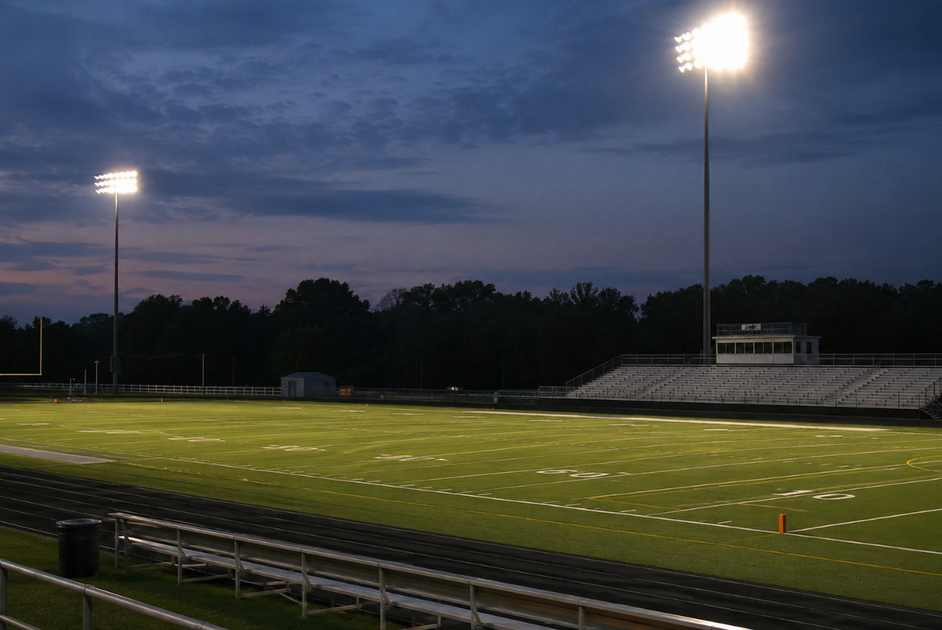
199. LED Sports Field Lighting Capabilities: Performance, Efficiency & Modern Features
By Dani Thomason • Jul 20, 2026
Whether you're illuminating a community athletic complex, a high school stadium, or a collegiate sports venue, the quality of your sports field lighting has a direct impact on player performance, spectator experience, and facility operations. Today's athletic facilities demand more than simply bright lights, they need lighting systems that deliver consistent illumination, reduce operating costs, and provide flexibility for a variety of sporting events.
That's where LED sports field lighting stands apart.
Modern LED technology has transformed the way sports facilities are illuminated, offering capabilities that traditional metal halide systems simply can't match. From improved visibility and advanced glare control to smart lighting controls and reduced maintenance, LED systems help facility owners create safer, more efficient environments for athletes and fans alike.
Whether you're upgrading an existing field or designing a new facility, understanding the capabilities of today's LED lighting systems can help you make a more informed investment.
In this guide, we'll explore the key features that make LED sports field lighting the preferred choice for modern athletic facilities and explain how these systems support everything from local recreation leagues to professional competition.
Key Takeaways
- LED sports field lighting provides superior visibility, energy efficiency, and longer fixture life than traditional lighting technologies.
- Smart controls allow facilities to customize lighting levels for practices, games, and special events.
- LED systems can be tailored to meet the unique requirements of different sports and facility sizes.
Why LED Sports Field Lighting Has Become the Industry Standard
For decades, athletic facilities relied on metal halide fixtures to illuminate outdoor fields. While these systems served their purpose, they came with several limitations, including high energy consumption, lengthy warm-up times, and frequent maintenance requirements.
Today's LED sports field lighting addresses these challenges while delivering significantly improved performance.
Unlike traditional fixtures, LEDs reach full brightness almost instantly, maintain consistent light output throughout their lifespan, and consume substantially less electricity. They also offer greater flexibility, allowing facilities to customize lighting levels based on the type of event taking place.
As schools, municipalities, universities, and sports complexes look for ways to reduce operating expenses while improving the player experience, LED technology has become the new standard for modern sports lighting.
1. Superior Visibility and Uniform Illumination
One of the greatest advantages of LED technology is its ability to produce consistent, even illumination across an entire playing surface.
Uneven lighting creates shadows and dark spots that make it more difficult for athletes to judge distance, track fast-moving balls, and react quickly during competition. Modern LED light fixtures are designed to distribute light evenly across the field, improving visibility from goal line to goal line.
Consistent illumination also benefits referees, coaches, and spectators by making the game easier to follow regardless of where they're positioned.
For facilities hosting evening competitions, improved visibility contributes to both player safety and overall game quality.
2. Precision Optics and Glare Reduction
Brightness alone doesn't determine the effectiveness of a lighting system.
Modern LED fixtures use advanced optical designs that precisely direct light where it's needed while minimizing glare for players and fans.
This targeted approach offers several benefits:
- Improved player comfort
- Better ball tracking
- Reduced eye strain
- Enhanced viewing experience for spectators
- Improved visibility for broadcast and recording equipment
Instead of wasting light outside the playing area, today's fixtures maximize usable illumination on the field itself.
Many modern LED stadium light solutions also offer multiple beam distributions, allowing designers to optimize lighting layouts for different field dimensions and pole heights.
3. Greater Energy Efficiency
Energy efficiency remains one of the biggest reasons facilities upgrade their stadium lights. Compared to older technologies, LED fixtures require significantly less electricity while delivering the same, or even better, lighting performance.
Lower energy consumption helps facilities reduce utility costs, lower operating expenses, and support sustainability initiatives. For facilities operating multiple sports fields, these savings can become substantial over the lifetime of the system.
4. Smart Controls and Flexible Operation
Today's lighting systems do far more than simply turn on and off. Modern LED technology can integrate with intelligent control systems that allow operators to adjust lighting levels based on the activity taking place.
Rather than operating every fixture at full output all the time, facility managers can tailor lighting levels to match specific needs, improving efficiency without compromising visibility.
Many systems also include remote monitoring, scheduling features, and automated controls that simplify day-to-day operation.
5. Built for Outdoor Performance
Athletic facilities operate year-round in a wide range of environmental conditions. Rain, snow, wind, heat, and changing temperatures all place demands on outdoor lighting equipment.
Fortunately, modern LED fixtures are engineered for long-term durability. High-quality stadium light systems feature rugged housings, corrosion-resistant finishes, and weather-resistant components designed to perform reliably in challenging environments.
This durability helps reduce unexpected downtime while ensuring consistent performance season after season.
6. Reduced Light Spill and Better Community Compatibility
Athletic complexes are often located near neighborhoods, schools, parks, or commercial developments.
Without proper fixture design, excessive illumination can extend beyond the playing surface, creating unwanted light for nearby properties. Modern LED optics help direct light precisely where it's needed, reducing unnecessary spill and improving overall efficiency.
This precision is especially valuable for facilities operating during evening hours in residential areas.
7. Adaptable for Every Type of Sports Facility
One of the biggest strengths of LED technology is its versatility. Today's sports lighting systems can be customized to meet the unique requirements of virtually any athletic venue.
Whether designing a small recreational complex or a large competitive facility, lighting professionals can adjust fixture selection, beam angles, mounting heights, and layouts to achieve optimal performance.
This flexibility allows the same core technology to support a wide variety of applications while maintaining consistent illumination and energy efficiency.
LED Sports Field Lighting Across Different Athletic Facilities
While every sport has unique lighting requirements, the capabilities of modern LED systems make them adaptable to a wide variety of athletic environments. From local recreation centers to collegiate campuses and professional venues, the same core technology can be customized to deliver the right level of performance for virtually any application.
Soccer Field Lighting
High-quality soccer field lighting prioritizes uniform illumination across the entire playing surface so athletes can accurately track the ball from any position on the field. Carefully aimed fixtures also help reduce glare during aerial passes while maintaining excellent visibility for officials and spectators.
Many facilities use programmable lighting controls to operate at lower levels during practices and full output during competitive matches, improving overall energy efficiency.
Baseball and Softball Field Lighting
Unlike rectangular fields, baseball and softball facilities require different lighting strategies for the infield, outfield, and foul territory.
Modern baseball field lighting and softball field lighting systems use precision optics to account for high fly balls while providing consistent illumination throughout the field. This helps players judge ball trajectory more accurately while reducing harsh shadows around the bases and pitching areas.
Basketball, Volleyball, and Pickleball Courts
Indoor and outdoor courts benefit from lighting that provides excellent visibility without distracting players during fast-paced competition.
Whether designing basketball court lighting, volleyball court lighting, or pickleball court lighting, LED fixtures deliver consistent illumination while minimizing glare that could interfere with serves, shots, or overhead plays.
Many recreational facilities also appreciate the flexibility of programmable controls, allowing courts to operate independently based on scheduling needs.
Tennis Courts and Horse Arenas
Sports that require athletes to consistently look upward place additional demands on lighting design.
Modern tennis court lights are engineered to reduce direct glare while maintaining excellent visibility as players track fast-moving balls across the court.
Similarly, horse arena lighting benefits from uniform illumination that improves rider visibility while creating a more comfortable environment for both horses and spectators.
Frequently Asked Questions
What are the benefits of LED sports field lighting?
LED sports field lighting offers improved energy efficiency, longer fixture life, better visibility, reduced maintenance, and advanced controls compared to traditional lighting technologies.
Can LED lighting be customized for different sports?
Yes. Modern sports lighting systems can be engineered for a variety of applications, including soccer, baseball, softball, basketball, volleyball, tennis, and other athletic facilities.
How do LED stadium lights reduce operating costs?
LED fixtures consume less electricity, require fewer replacements, and need less maintenance than conventional lighting systems, lowering overall operating expenses.
Are LED sports lights suitable for indoor and outdoor facilities?
Absolutely. LED technology performs exceptionally well in both outdoor athletic venues and indoor lighting applications, making it a versatile solution for nearly any sports facility.
How long do LED stadium lights last?
High-quality stadium lights are designed to provide tens of thousands of hours of operation, significantly extending service life compared to older lighting technologies.
Final Thoughts
Modern LED sports field lighting has transformed the way athletic facilities approach performance, efficiency, and long-term operations. Today's systems deliver far more than basic illumination, they provide precise light distribution, improved visibility, intelligent controls, and dependable performance that supports athletes, officials, and spectators alike.
Whether you're upgrading an existing venue or planning a new athletic complex, investing in high-quality sports field lighting helps create a safer, more enjoyable experience while reducing maintenance and operating costs.
At OEO Energy Solutions, we offer high-performance lighting solutions for athletic complexes of every size. From sports lighting and stadium lighting to commercial site lighting and outdoor applications, our team can help you identify the right products for your project, optimize system performance, and create a lighting solution built to perform for years to come.