193. Harsh Environment Lighting: Best LED Fixtures for Demanding Industrial Spaces
By Dani Thomason • Jun 09, 2026
Not every space plays nice with a standard light fixture. Some lighting systems will crack under pressure. Throw a run-of-the-mill fixture into a meat-packing plant or an oil refinery, and you'll be replacing it before you know it, all while watching your maintenance costs climb.
That's where harsh environment lighting comes in. In plain terms, it's lighting built to survive conditions that would destroy ordinary fixtures: moisture, dust, brutal cold, blistering heat, and the constant threat of corrosion or explosion. These aren't your office ceiling panels. They're rugged, sealed, and engineered to keep working when everything around them is trying to break them.
Why do traditional lighting setups fall apart in these spaces? It usually comes down to sealing and materials. Standard LED fixtures let moisture seep in, dust pile up, and vibration shake things loose. Once that happens, you're staring at flickering lights, premature failures, and in the worst cases, a genuine safety hazard. Modern LED lighting flips the script. Today's durable LED lights pair tough housings with low heat output and serious energy savings, making them the go-to lighting solution for the most demanding industrial environments out there.
This guide walks you through the best fixtures for the job and what separates a reliable lighting product from one that'll let you down.
Key Takeaways
- Harsh environment lighting is purpose-built for extreme conditions. Whether you're dealing with combustible dust, flammable gas, corrosive environments, or extreme temperatures, the right LED fixtures are sealed and rated to perform where standard lighting fails.
- IP and IK ratings are your best friends. These ratings tell you exactly how well a lighting fixture resists dust, water, and physical impact, so you can match the fixture to the hazardous area without guesswork.
- LED lighting cuts costs and boosts safety. Compared to traditional lighting, LED harsh environment lighting delivers longer lifespan, lower maintenance, and better reliability, especially in industrial environments where downtime is expensive.
What Is Harsh Environment Lighting?
Harsh environment lighting refers to fixtures engineered to operate in conditions that would destroy conventional lights. Think of it as lighting that’s built to be extra durable.
Here are the common challenges these fixtures are built to handle:
- Moisture. Humidity, washdowns, rain, and condensation all spell trouble for unsealed fixtures.
- Dust and debris. Fine particles infiltrate housings, blanket components, and reduce light output over time.
- Extreme temperatures. From sub-zero freezers to scorching foundries, temperature swings stress materials and electronics.
- Chemicals and corrosion. Acids, salts, and cleaning agents eat away at standard metals and finishes.
- Vibration and impact. Heavy machinery and forklifts create shocks that loosen connections and crack lenses.
When a fixture can shrug off these threats, you've got proper harsh environment lighting. When it can't, well, you've got a replacement waiting to happen.
Common Applications for Harsh Environment Lighting
You'd be surprised how many industries lean on these lighting fixtures. Harsh environment lighting shows up wherever conditions get rough, including:
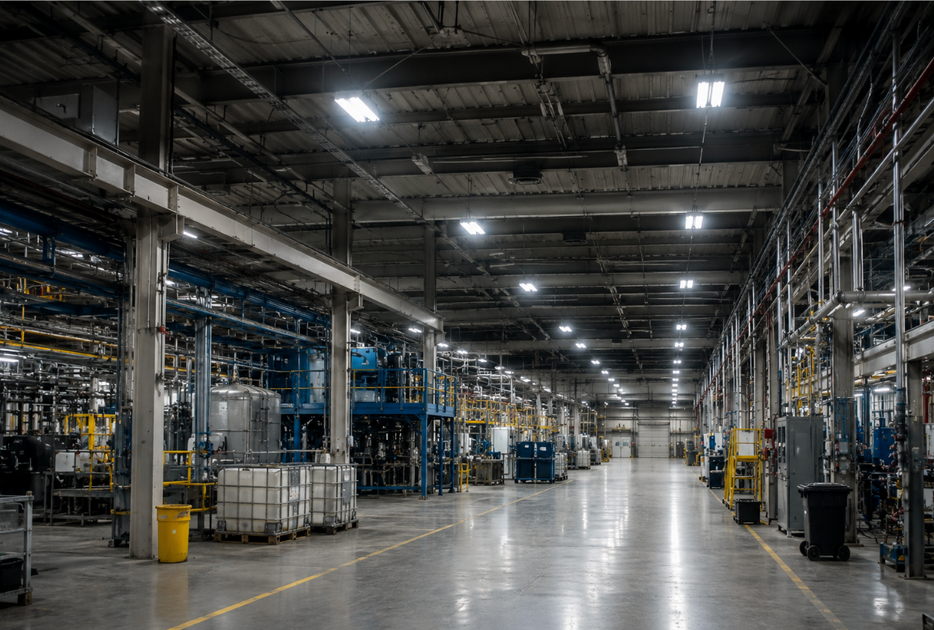
- Manufacturing facilities with heat, dust, and constant vibration, where rugged LED industrial factory lights keep production floors bright and safe
- Warehouses needing reliable, high-mounted illumination
- Food processing plants that demand frequent washdowns and hygienic surfaces
- Car washes where moisture and chemicals never let up
- Cold storage facilities with punishing low temperatures
- Oil and gas environments where explosive gases and flammable vapors lurk
- Parking garages and outdoor industrial spaces exposed to weather and grime
Each setting has its own quirks, which is exactly why no single fixture fits all. Let's break down the main types.
Vapor Tight Lighting
Vapor tight fixtures are sealed enclosures designed to lock out moisture, dust, and vapors. The gaskets and tight housings keep contaminants where they belong, on the outside.
These shine brightest in damp, dirty, or dusty environments. Car washes, parking garages, cold storage, and food prep areas all benefit from vapor tight LED lights. The big win? Protection against both moisture intrusion and dust buildup, which translates to steadier performance and far fewer service calls. For a lot of harsh environments, a vapor tight linear light is the simplest, smartest place to start.
Explosion Proof Lighting
Now we're getting into serious territory. Explosion proof lighting doesn't mean the fixture won't explode. It means the fixture is built to contain any internal spark so it can't ignite the flammable gas, combustible dust, or ignitable fibers floating around it. That distinction matters in a hazardous location.
Explosion proof lights are classified by hazardous location standards (Class I, II, and III, along with divisions and zones) based on what hazardous substances are present and how often. A space with explosive gases is rated differently than one full of combustible dust.
Common applications for hazardous location lighting include:
- Oil and gas refineries
- Chemical processing plants
- Grain elevators and mills handling combustible dust
- Paint booths thick with flammable vapors
If your facility deals with any flammable gasses or hazardous material, LED explosion proof lights aren't optional. They're the difference between a controlled operation and a catastrophe.
Corrosion-Resistant Lighting
Some environments don't burn or freeze. They corrode. Saltwater air, chemical fumes, and harsh cleaning agents slowly destroy unprotected fixtures.
Corrosion-resistant proof lighting tackles this head-on with materials like marine-grade aluminum, stainless steel, and non-metallic composites, often topped with protective powder coatings. These materials refuse to rust, pit, or degrade under chemical assault.
Best use cases? Coastal facilities, wastewater treatment plants, and any setting drenched in corrosive substances. When you're battling corrosive environments day in and day out, this is the lighting solution that endures.
High Bay Lighting for Harsh Industrial Spaces
For tall, open spaces, LED high bay fixtures are the workhorses. When it comes to LED lighting for manufacturing plants and large warehouses, they flood expansive areas with bright, even light from way up high.
The best industrial high bay LED lights handle temperature extremes without dimming or failing, and they're built tough. This is where IP and IK ratings earn their keep. A high IP rating keeps dust and moisture out, while a strong IK rating means the fixture can take a hit (literally) and keep going. In busy industrial environments, that durability is everything.
Washdown & Food Processing Lighting
Food and beverage facilities live by strict hygiene rules. Lighting here has to survive aggressive, high-pressure washdowns and resist bacteria buildup.
Washdown fixtures feature smooth, sealed, easy-to-clean designs with no nooks for grime to hide. They're waterproof, often NSF-certified or compliant, and engineered to handle daily sanitation without problem. In a space where safety and cleanliness are non-negotiable, these lighting products keep both the food and the inspectors happy.
Key Features to Look for in Harsh Environment Lighting
Shopping for the right fixture? Keep an eye on these:
- IP ratings for dust and water resistance (IP65, IP66, IP67 are common benchmarks)
- IK impact ratings for physical durability against knocks and vibration
- Temperature tolerance so the fixture performs across its rated range
- Energy efficiency and lifespan to maximize savings and minimize replacements
- Mounting and maintenance considerations for easy installation and upkeep
Nail these, and you've found a lighting fixture worth its salt.
Benefits of LED Harsh Environment Lighting
Why has LED become the standard for hazardous lighting? Harsh environment LED lighting wins on a few big fronts:
- Reduced maintenance. Sealed LED lights need far less attention than older technologies.
- Longer lifespan. Many fixtures run 50,000 to 100,000 hours, dwarfing traditional lighting.
- Energy savings. LEDs sip power, slashing utility bills.
- Improved reliability and safety. Consistent light and rugged builds keep workers safe and operations humming.
In short, LED hazardous area lighting pays for itself.
Choosing the Right Harsh Environment Lighting Solution
So how do you pick? Start by matching the fixture to your conditions. Work with explosive gases? You need explosion proof lighting. Battling salt and chemicals? Corrosion-resistant fixtures. Dusty and damp? Vapor tight is the right call.
Next, weigh indoor versus outdoor needs. Outdoor flood lighting demands weatherproofing and wider beam spreads, and a quality LED flood light can transform a dark yard into a safe, productive space. Indoor hazardous zones may prioritize compact, high-output fixtures instead.
Finally, don't skip photometric planning. Proper layout ensures even coverage, eliminates dark spots, and meets safety standards without over-lighting. A little planning upfront saves a lot of headaches down the road. When in doubt, lean on durable lighting experts who know how to spec fixtures for hazardous area lighting the right way.
FAQ
What's the difference between vapor tight and explosion proof lighting?
Vapor tight fixtures seal out moisture and dust, making them great for wet or dirty spaces. Explosion proof lights go further, containing internal sparks so they can't ignite flammable gas or combustible dust in a hazardous area.
Do I really need special lighting for my industrial space?
If your environment involves dust, moisture, chemicals, extreme temperatures, or explosive substances, then yes. Standard fixtures fail fast in these conditions, and in hazardous environments, that failure can be dangerous. Purpose-built harsh environment lighting is the safer, smarter call.
What IP rating do I need for a harsh environment?
It depends on the threat. IP65 handles dust and low-pressure water, while IP66 and IP67 stand up to powerful jets and temporary submersion. For dusty or wet industrial environments, IP65 or higher is usually the baseline.
Are LED explosion proof lights worth the cost?
Absolutely. While the upfront price runs higher than traditional lighting, LED explosion proof lights last longer, use less energy, and require minimal maintenance. Over time, they cost less and keep your hazardous zones safer.
Conclusion
Demanding spaces call for tough lighting, plain and simple. Whether you're protecting against combustible dust, flammable vapors, corrosive environments, or extreme temperatures, the right LED fixtures keep your facility bright, efficient, and safe. From vapor tight linear lights to LED explosion proof lights, there's a proven lighting solution for every challenge.
The bottom line? Don't gamble on standard fixtures in extreme environments. Invest in harsh environment lighting built for the job, and you'll enjoy years of reliable performance, lower costs, and the peace of mind that comes with knowing your lighting won't quit when you need it most.