203. How to Know If a Ballast Is Bad: 7 Signs to Look For
By Dani Thomason • Sep 23, 2026
A fluorescent light starts flickering. Then it takes longer than usual to turn on. A few days later, you notice an irritating hum coming from the fixture. Is the lamp reaching the end of its life, or is something else going on?
The ballast could be the culprit.
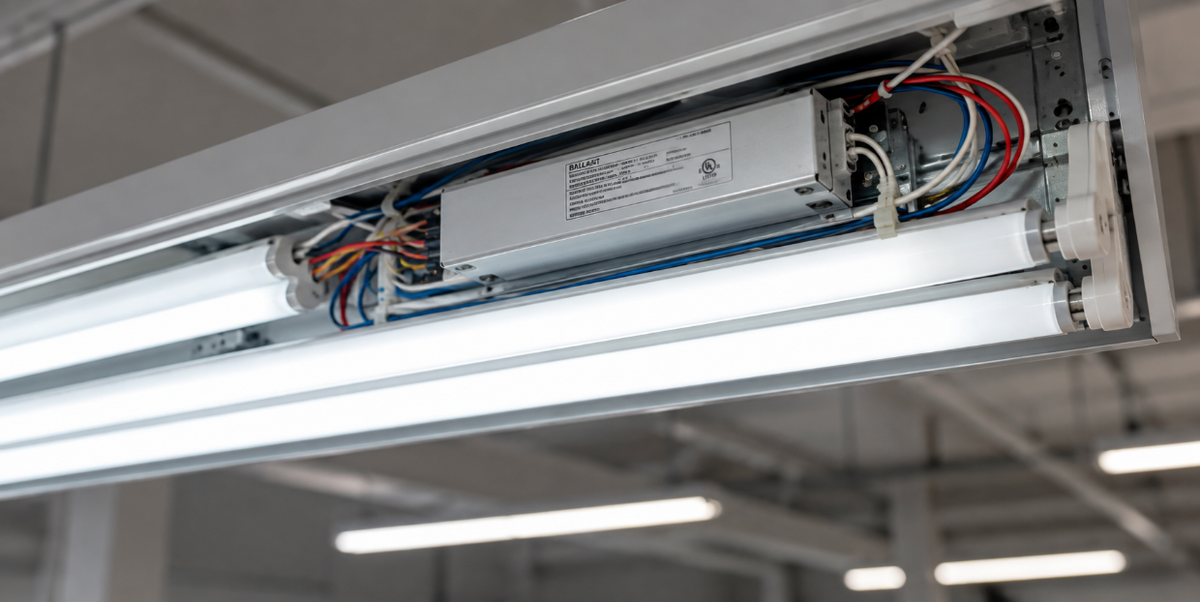
Ballasts play an important role in fluorescent and other traditional lighting systems by regulating the electrical current supplied to the lamp. When one begins to fail, the symptoms can range from subtle changes in performance to a light fixture that stops working altogether.
Knowing how to know if a ballast is bad can help facility managers identify potential problems, avoid repeatedly replacing lamps that aren't actually the issue, and determine whether it's time for a repair or a larger lighting upgrade.
Below, we'll cover seven common warning signs of a bad ballast, what can cause ballast failure, and when replacing an aging fluorescent system with LED may make more sense.
Key Takeaways
- Common signs of a bad ballast include flickering, buzzing, dim lighting, delayed starts, frequent lamp failures, overheating, and lights that won't turn on.
- A malfunctioning lamp doesn't automatically mean the ballast has failed. Wiring, power supply, lamp condition, and other electrical components should also be considered.
- A visual inspection can reveal signs such as discoloration, leaking material, corrosion, or burn marks.
- Electrical testing should be performed by qualified personnel following appropriate safety procedures and manufacturer instructions.
- Many modern LED fixtures don't require the fluorescent ballast used by traditional fluorescent lamps.
How Do You Know If a Ballast Is Bad?
So, how do you know if a ballast is bad rather than dealing with a worn-out fluorescent tube? There's no single symptom that confirms ballast failure in every situation. Instead, look for a combination of changes in how the fixture starts, sounds, and performs.
Here are seven of the most common signs.
1. Lights Are Flickering
Flickering is one of the first things people notice when a fluorescent lighting system isn't operating correctly. A brief flicker during startup doesn't necessarily mean you have a failing ballast, especially with certain older fluorescent systems. Persistent or worsening flickering, however, deserves attention.
A ballast that's no longer regulating current properly may cause the fluorescent tube to operate inconsistently. Before blaming the ballast, check the lamp itself. An old or improperly installed tube can also flicker. If replacing or reseating the lamp doesn't solve the problem, the ballast and other fixture components may need to be inspected.
2. Buzzing or Humming Sounds
Fluorescent lighting has a reputation for humming, particularly older systems using magnetic ballasts. But a buzzing sound that becomes noticeably louder or appears suddenly can signal a problem.
As a ballast ages, internal components may deteriorate and produce more audible noise. A damaged ballast or loose component within the light fixture may also create buzzing or humming.
Modern electronic ballasts generally operate more quietly than older magnetic designs, so unusual noise from an electronic ballast can be particularly noticeable. If multiple older fixtures are becoming noisy, it may be worth evaluating the condition of the overall lighting system rather than treating each fixture as an isolated problem.
3. Lights Are Dim or Discolored
A fluorescent fixture that suddenly looks dimmer than neighboring fixtures may have a lamp problem, but the ballast can also be responsible. The ballast needs to supply the correct electrical conditions for the lamp to operate as intended. A faulty ballast may cause inconsistent output or prevent the lamp from reaching normal brightness.
Discoloration can also appear as fluorescent tubes age. Darkened ends on a tube, for example, often point toward lamp wear rather than proving that the ballast has failed. That's why comparing the fixture with nearby lights and checking the lamp condition can be useful before moving on to ballast testing.
4. Lights Take Too Long to Turn On
Does a fluorescent fixture hesitate before coming to life? Delayed startup can be another symptom of ballast trouble.
The fixture may take several attempts to start, flicker for an extended period, or turn on noticeably later than other fixtures connected to the same system. Temperature, lamp condition, and the type of ballast can all affect startup behavior, so a delay isn't definitive proof of ballast failure. However, when slow startup is new or progressively getting worse, it's worth investigating.
5. Lights Frequently Burn Out
Replacing the same fluorescent lamp over and over again is frustrating. It's also a clue that the lamp may not be the real problem. If lamps consistently fail well before their expected service life, the ballast or another electrical issue could be affecting their operation.
The ballast is responsible for regulating current through the lamp. When it isn't functioning correctly, the resulting electrical conditions can contribute to premature lamp failure. Before installing yet another replacement tube, have the fixture evaluated for underlying problems.
For commercial and industrial lighting systems with dozens or hundreds of fluorescent fixtures, repeated lamp replacement can quickly turn into a significant maintenance expense.
6. The Ballast Is Overheating
Lighting equipment naturally produces some heat, but excessive heat can indicate trouble. Signs of overheating may include discoloration, a burnt odor, damaged wiring, or visible burn marks around the ballast or other fixture components.
During a visual inspection, also look for corrosion, leaking material, swelling, cracked components, or other signs of physical damage. Never ignore signs of overheating or electrical damage.
If a fixture smells burnt, shows visible damage, or appears unsafe, qualified personnel should disconnect and inspect it according to applicable electrical safety procedures.
7. Lights Won't Turn On
A completely dark fixture is perhaps the most obvious sign that something has failed, but it doesn't automatically mean the ballast is bad. The problem could be the fluorescent lamp, ballast, wiring, power supply, switch, circuit breaker, or another electrical component.
If a known-compatible lamp doesn't solve the issue and the fixture is receiving the correct power, the ballast becomes one of the components that should be evaluated. The important point is not to jump straight to ballast replacement without ruling out other common issues.
How to Test If a Ballast Is Bad
If the warning signs point toward the ballast, the next step is determining whether the component itself has failed.
Because a ballast is connected to a fixture's electrical system, testing should be handled by qualified personnel familiar with electrical safety procedures and the specific equipment.
The process generally begins with confirming that the fixture is receiving the correct voltage and checking whether the lamp, sockets, wiring, and connections show obvious problems.
A visual inspection may reveal:
- Burn marks or discoloration
- Damaged or melted wiring
- Loose connections
- Corrosion
- Leaking or swollen components
- Other visible physical damage
Depending on the ballast and fixture, a qualified technician may use appropriate electrical testing equipment and manufacturer specifications to evaluate the ballast, wiring, ballast terminals, voltage, resistance, or continuity as applicable.
Electrical systems can retain or carry dangerous voltage. Power should be properly isolated before components are handled, and electrical testing should never be improvised. For a commercial facility, having a qualified electrician or lighting professional troubleshoot the system is the safer approach.
Is It the Ballast or the Bulb?
This is one of the trickier parts of diagnosing fluorescent lighting because a failing lamp and a failing ballast can produce similar symptoms.
Flickering, dim output, delayed starting, and failure to illuminate can all be caused by the lamp itself.
One useful clue is the age and appearance of the fluorescent tube. If the tube has darkened ends or is near the end of its expected operating life, the lamp may simply need replacement.
If a compatible replacement lamp works correctly in the fixture, the ballast may still be functioning properly.
On the other hand, if new lamps repeatedly experience the same problem, the ballast, sockets, wiring, or incoming power should be investigated.
Looking at the pattern of failures can also help. One old lamp failing is normal. Multiple lamps experiencing unusual performance in the same fixture points toward a broader issue.
What Causes a Ballast to Go Bad?
Ballasts don't last forever. Like other electrical components, they can deteriorate over time.
Common causes of ballast failure include:
- Age: Internal components naturally degrade after years of operation.
- Excessive heat: High operating temperatures can accelerate component deterioration.
- Voltage problems: Electrical conditions outside the ballast's intended operating range can affect performance and lifespan.
- Moisture: Water or excessive humidity can damage electrical components when fixtures aren't properly suited to the environment.
- Wiring problems: Loose, damaged, or deteriorating connections can contribute to lighting issues.
- Physical damage: Impact, corrosion, or other damage may compromise the ballast or fixture.
- Incompatible components: Lamps and ballasts need to be properly matched for the lighting system to operate correctly.
Environmental conditions matter as well.
A fluorescent fixture in an office has a very different job from equipment used in a parking structure, industrial plant, or other demanding environment. Commercial applications such as parking garage lighting and certain vapor-tight applications require fixtures designed for their specific operating conditions.
Using the correct lighting equipment for the environment can help support safer, more reliable lighting performance.
Should You Replace a Bad Ballast or Upgrade to LED?
Finding a bad ballast leaves facility managers with an important decision: replace the ballast or move away from the fluorescent system altogether?
Replacing the ballast may make sense when the fixture is otherwise in good condition and the facility intends to continue using fluorescent lamps. But the equation changes when ballast failures become part of a larger pattern.
If a commercial building has aging fluorescent fixtures that regularly need new lamps, ballasts, or other repairs, continuing to replace individual components can create an ongoing maintenance cycle. In this case, an LED upgrade may provide several advantages.
Reduced Maintenance
Modern LED fixtures eliminate many of the lamps and ballasts associated with traditional fluorescent systems. That means fewer components that require routine replacement.
Improved Energy Efficiency
LED technology can provide the required illumination while using less energy than many older fluorescent and HID systems. Across a large commercial or industrial facility, reducing energy consumption can create meaningful long-term savings.
Longer Operating Life
LED fixtures typically provide long service lives, which can be particularly valuable in facilities where lighting is difficult or expensive to access.
Think about a warehouse, parking garage, manufacturing facility, or automotive dealership. Every time maintenance teams need lifts or specialized equipment to reach a fixture, a simple lamp or ballast change becomes more involved.
More Lighting Options
LEDs are available for a wide range of commercial and industrial applications, from wall mount lighting and flood lighting to parking garages, warehouses, manufacturing facilities, and specialized environments.
Facilities can also select LED products based on factors such as light output, color temperature, controls, environmental ratings, and application-specific requirements. For certain commercial environments, specialized products such as NSF Listed LED fixtures or fixtures designed for hazardous locations may be necessary.
The decision ultimately depends on the condition of the existing system, the cost of repair, operating hours, energy use, and the facility's long-term plans.
Do LED Lights Need a Ballast?
Most dedicated LED fixtures don't use a fluorescent ballast. Instead, LED lighting typically relies on an LED driver or other electronics designed specifically to regulate power for the LEDs. However, LED retrofit lamps can work differently depending on their design.
Some LED tubes are designed to operate with compatible existing fluorescent ballasts. Others bypass the ballast and connect through a different wiring configuration. There are also complete LED fixture replacements that remove the fluorescent lamp-and-ballast system altogether. This distinction matters because not every LED tube is compatible with every fluorescent ballast.
Before converting an existing fluorescent fixture, verify the requirements of the LED product and the condition of the existing electrical system. Installation and rewiring should be completed according to manufacturer instructions and applicable electrical codes.
FAQs About Bad Ballasts
What are the most common signs of a bad ballast?
Common warning signs include flickering lights, buzzing or humming, dim output, delayed startup, frequent lamp failures, overheating, and fixtures that won't turn on. Because several other lighting problems can cause similar symptoms, these signs don't automatically confirm ballast failure.
Can a bad ballast cause lights to burn out?
A faulty ballast may contribute to premature lamp failure if it isn't regulating electrical conditions correctly. If lamps repeatedly fail in the same fixture, the ballast and other electrical components should be evaluated.
How long does a fluorescent ballast last?
Ballast lifespan varies based on ballast type, operating hours, temperature, electrical conditions, and the surrounding environment. Rather than relying on age alone, facility managers should pay attention to changes in fixture performance and recurring failures.
Is it worth replacing a fluorescent ballast?
It depends on the age and condition of the overall lighting system. Replacing one ballast may be reasonable in a relatively modern fluorescent system. If a facility is experiencing widespread lamp and ballast failures, upgrading to LED may offer better long-term energy and maintenance savings.
Dealing With Ballast Problems? Consider an LED Upgrade
A flickering fluorescent tube or noisy fixture might seem like a minor annoyance, but recurring ballast issues can be a sign that an aging lighting system deserves a closer look.
If problems are isolated, replacing a faulty ballast may restore normal operation. But when lamps, ballasts, and other components are failing throughout a commercial or industrial facility, repeatedly repairing older technology may not be the most efficient long-term strategy.
OEO Energy Solutions helps businesses replace outdated fluorescent and other traditional lighting systems with energy-efficient LED solutions designed for commercial and industrial environments.
If you're dealing with recurring ballast failures or considering a larger lighting upgrade, contact the lighting experts at OEO Energy Solutions to explore the right LED solution for your facility.