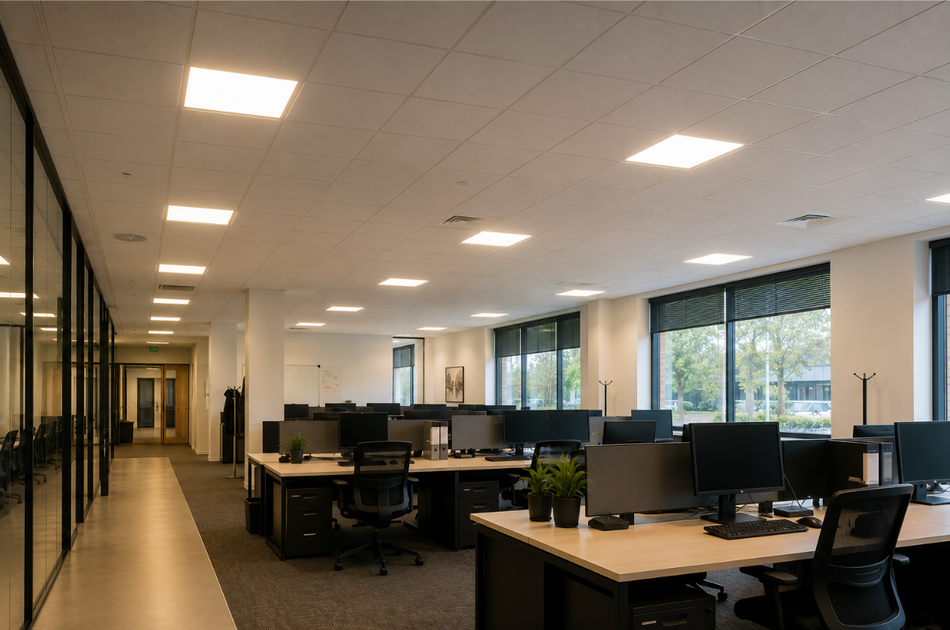
198. How to Choose the Right LED Lighting Product Color Temperature: A Complete Guide
By Dani Thomason • Jul 15, 2026
When selecting new LED lighting, it's easy to focus on brightness, wattage, or energy savings. While those factors are important, one specification has an even greater impact on how a space looks, feels, and functions: color temperature.
The right LED color temperature can improve visibility, increase productivity, enhance safety, and make products appear more vibrant. Whether you're installing commercial LED light fixtures in an office, upgrading industrial LED light bulbs in a warehouse, or replacing outdated lamps with modern LED technology, choosing the appropriate color temperature ensures your lighting performs as intended.
In this guide, we'll explain how color temperature works, how it differs from color rendering, and how to choose the best option for different industrial and commercial lighting applications.
Key Takeaways
- LED color temperature is measured in Kelvin (K) and determines whether light appears warm, neutral, or cool.
- Lower Kelvin ratings produce warm white light, while higher ratings create cooler, brighter illumination.
- The best color temperature depends on how the space is used, not simply personal preference.
- Both color temperature and Color Rendering Index (CRI) should be considered when selecting commercial LED lighting products.
What Is LED Color Temperature?
Color temperature describes the appearance of the light produced by an LED fixture, it does not refer to how hot the fixture becomes.
Measured in Kelvin (K), color temperature indicates whether a light source appears warm and yellow, neutral white, or cool with subtle blue tones. As the Kelvin rating increases, the light shifts from a warm glow to a brighter, daylight-like appearance.
Unlike traditional incandescent bulbs, today's LED technology allows businesses to select a specific color temperature based on the application. This flexibility makes it easier to create comfortable office environments, improve visibility in warehouses, or highlight merchandise in retail settings.
Understanding the Kelvin Scale
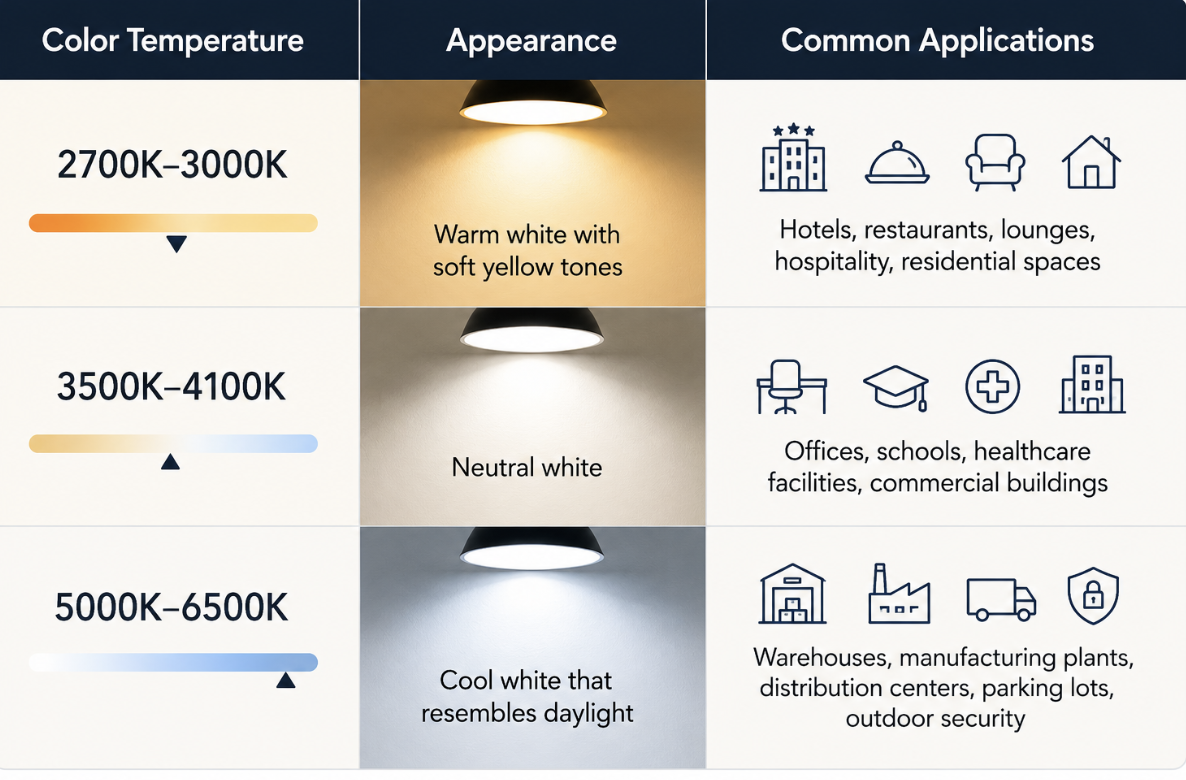
Color temperature generally falls into three categories:
While many people mix up cool white vs day light vs warm white, they are actually all different. Warm white creates a comfortable, inviting atmosphere, while neutral white offers a balance between comfort and visibility. Higher Kelvin ratings provide crisp illumination that improves contrast, making them a popular choice for industrial environments where precision and safety are priorities.
Color Temperature vs. Color Rendering
Color temperature and Color Rendering Index (CRI) are often confused, but they measure two different aspects of lighting.
- Color temperature determines how the light itself appears.
- CRI measures how accurately that light reveals the true colors of objects.
For example, two facilities may both use 5000K lighting, but a retail store typically requires a higher CRI than a warehouse so merchandise appears vibrant and true to life.
High CRI lighting is especially important for:
- Retail stores
- Healthcare facilities
- Automotive shops
- Manufacturing inspections
- Food preparation areas
- Photography studios
When evaluating commercial LED lighting products, both Kelvin rating and CRI should be considered to ensure optimal performance.
Why Color Temperature Matters
Selecting the right LED color temperature affects much more than aesthetics. It directly influences how people work, shop, and interact within a space.
In offices and educational environments, neutral to cool lighting helps employees stay alert while reducing eye strain during long workdays. In warehouses and manufacturing facilities, cooler lighting improves contrast, making it easier to read labels, inspect equipment, and identify potential hazards.
Customer-facing spaces often benefit from warmer lighting, which creates a more inviting atmosphere. Restaurants, hotels, and reception areas frequently use lower Kelvin ratings to make guests feel comfortable, while electronics retailers often choose cooler lighting to create a clean, modern appearance.
The goal isn't simply to choose the brightest light, it's to select a color temperature that supports the primary function of the space.
How to Choose the Right LED Lighting Product Color Temperature
Choosing the right LED color temperature starts with understanding how the space is used.
Consider the Primary Activity
Detailed tasks such as manufacturing, assembly, or quality inspections generally benefit from cooler lighting that improves visibility and contrast. Spaces focused on collaboration, customer service, or hospitality often perform better with warmer or neutral lighting that feels more comfortable.
Evaluate Natural Light
Buildings with abundant windows typically pair well with neutral or cooler LEDs because they complement daylight throughout the day. In areas with little natural light, a slightly warmer color temperature can help create a more welcoming environment.
Choose the Right Fixture
The fixture itself also plays an important role. Common commercial LED light fixtures include:
- LED high bay fixtures
- Troffers and panel lights
- Wall packs
- Area lights
- Canopy fixtures
- LED flood lights
Many facilities can also modernize existing systems by installing LED replacement lamps, commercial LED light bulbs or retrofit kits instead of replacing the entire fixture.
Frequently Asked Questions
What is the best LED color temperature for commercial buildings?
Most commercial buildings perform best with LED lighting between 3500K and 5000K, depending on how the space is used. Offices and healthcare facilities often benefit from 3500K–4000K for balanced, comfortable illumination, while warehouses and manufacturing facilities typically use 5000K to maximize visibility.
Is 4000K or 5000K better for industrial lighting?
It depends on the application. 4000K provides a neutral white light that's comfortable for employees working long hours, making it a good choice for offices and mixed-use commercial spaces. 5000K closely resembles daylight and is generally preferred for warehouses, manufacturing plants, and other industrial environments where visibility and precision are critical.
Does color temperature affect brightness?
No. Color temperature and brightness are two different measurements. Color temperature is measured in Kelvin (K) and describes the appearance of the light, while brightness is measured in lumens. A 4000K and a 5000K fixture can produce the same lumen output while creating a noticeably different visual appearance.
What color temperature is closest to natural daylight?
LED lighting between 5000K and 6500K most closely resembles natural daylight. These cooler color temperatures are commonly used in industrial and commercial lighting applications where improved contrast and visibility are important.
How do I choose the right commercial LED lighting products?
Start by evaluating how the space will be used, the amount of natural light available, ceiling height, and the type of fixture required. Selecting the appropriate commercial LED lighting products and color temperature ensures better visibility, improved comfort, and long-term energy savings.
Final Thoughts
Choosing the right LED lighting product color temperature is about more than selecting a warm or cool light, it's about creating an environment that supports the people and tasks within it. From improving visibility in warehouses and manufacturing facilities to creating comfortable office spaces and inviting retail environments, the right color temperature can have a significant impact on safety, productivity, and the overall user experience.
At OEO Energy Solutions, we offer high-performance commercial LED lighting products designed for a wide range of industrial and commercial applications. From industrial LED light fixtures and LED high bay fixtures to commercial LED light bulbs, T8 LED bulbs, and complete retrofit solutions, our team can help you find the right lighting products to improve efficiency, reduce maintenance, and deliver long-lasting performance.