
Some clubs are more than places to play.
They are where members build routines, stay active, meet friends, train with coaches, compete, recover, and feel part of a community. For a tennis and pickleball club like Evergreen Racquet Club in Bloomington, Illinois, that experience begins long before anyone steps onto the court.
It starts at the front desk.
It continues in the lobby, the offices, the locker rooms, and the common areas where members check in, talk, wait, prepare, and connect.
That is why Evergreen’s story is not just about replacing lights.
It is about a club that refused to dim its lights.
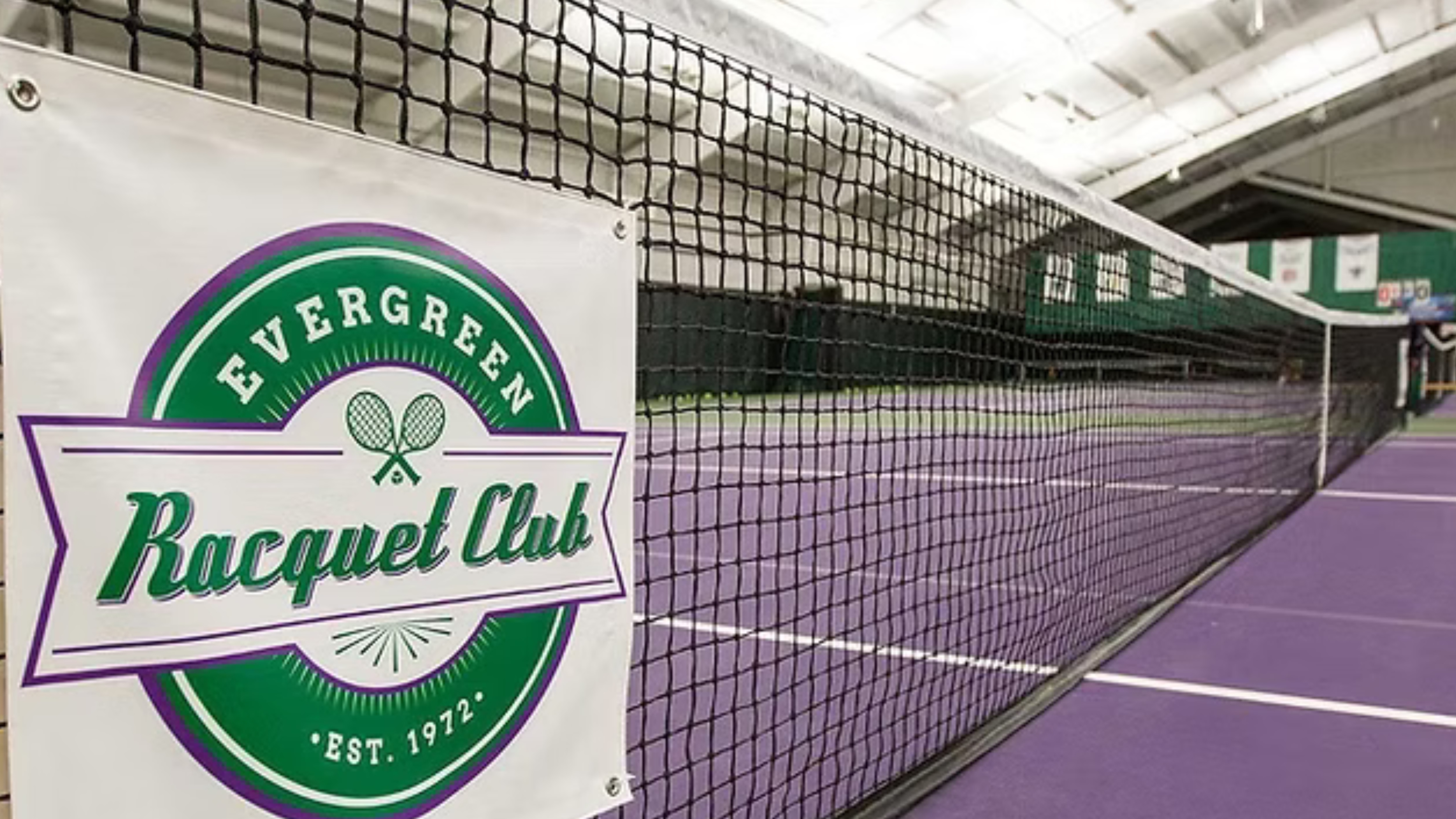
Under the leadership of General Manager Colleen Curran, Evergreen Racquet Club saw an opportunity to improve the everyday experience of its members while also reducing energy use and operating costs. The club already had bright, clean lighting on its tennis and pickleball courts. But in the lobby, offices, and locker rooms, the difference was noticeable. Fluorescent tubes buzzed overhead and cast uneven light that did not match the energy of what was happening on the courts.
For a club built around movement, wellness, and community, that mattered.
Evergreen wanted its entire facility to feel as bright, welcoming, and high-quality as the spaces where members play.
Through OEO Energy Solutions’ free LED upgrade program, funded by Ameren Illinois incentives, Evergreen was able to upgrade lighting throughout its facility with no out-of-pocket cost for products or installation.
The result was a smarter facility decision that supported members, staff, sustainability, and the long-term health of the club.
Leadership rooted in the tennis community
Colleen Curran brings a personal connection to the sport and to the Evergreen community.
A lifelong tennis player, she played four years for the University of Illinois before beginning a career in marketing management with IBM in Peoria and Chicago. After 15 years at IBM, she stepped away to raise three children. Her family later relocated to Bloomington, where she became an active member of Evergreen Racquet Club and the USTA.
In 2014, Colleen joined Evergreen as General Manager.
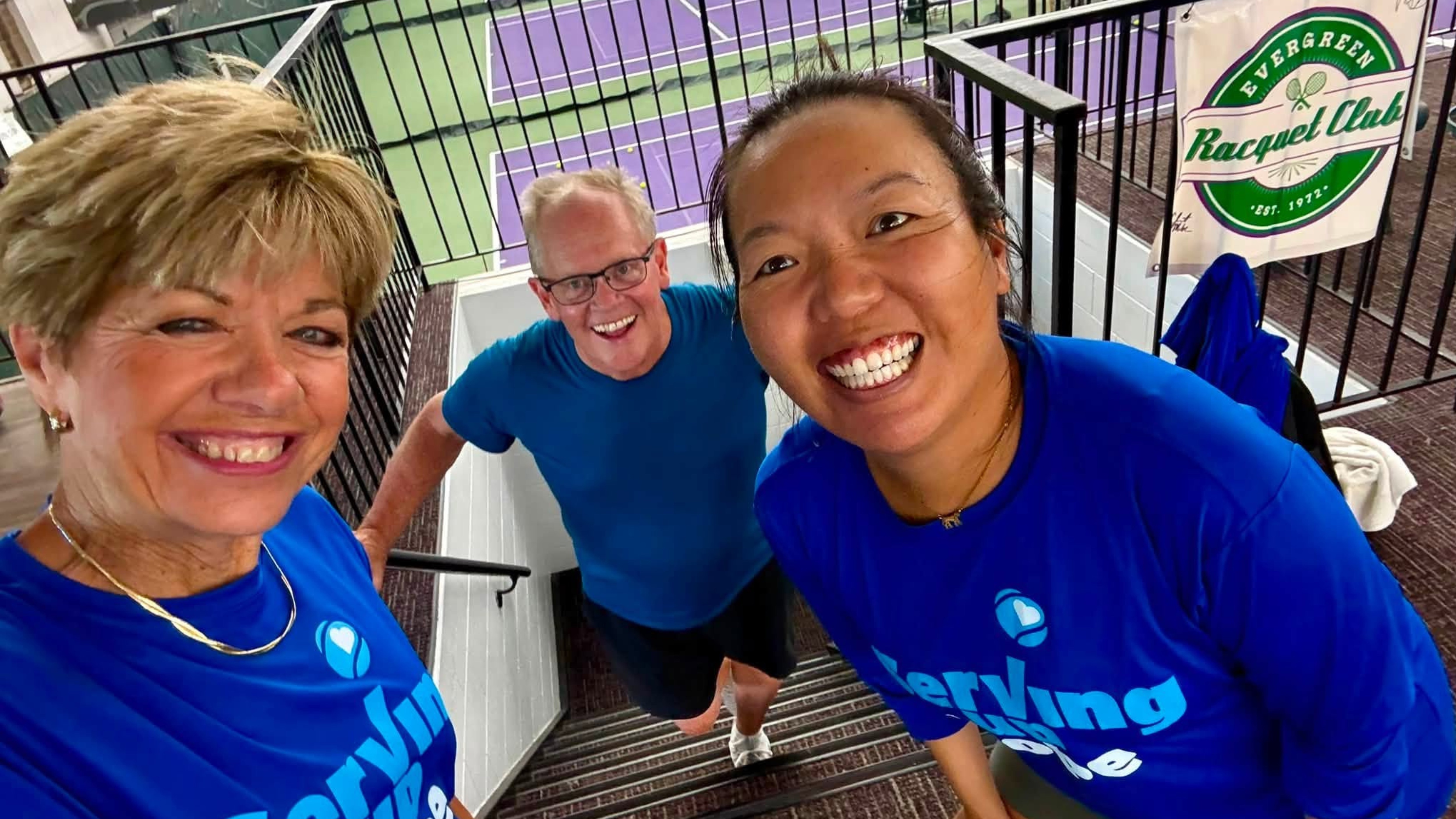
Her connection to the club was not only professional. She understood the member experience because she had lived it as a player, a community member, and someone who knows how much a local tennis club can mean to the people who gather there.
That perspective matters.
Facility leadership is not only about maintenance, budgets, and operations. It is also about noticing the details that shape how people feel when they walk through the door.
A brighter lobby feels more welcoming.
A better-lit locker room feels cleaner and more comfortable.
A well-lit office helps staff serve members in a better environment.
More consistent lighting across the club helps the entire facility feel cared for.
For Evergreen, upgrading the lighting in its common areas was a way to bring the full member experience up to the standard already set on the courts.
Caring for members beyond the court
At a racquet club, the courts will always be the heart of the facility.
But members do not experience a club only when they are playing.
They experience it when they arrive for a lesson.
They experience it when they wait for a match.
They experience it when they talk with staff.
They experience it when they use the locker rooms.
They experience it in the small moments before and after the game.
Those moments matter because they create the feeling of the club.
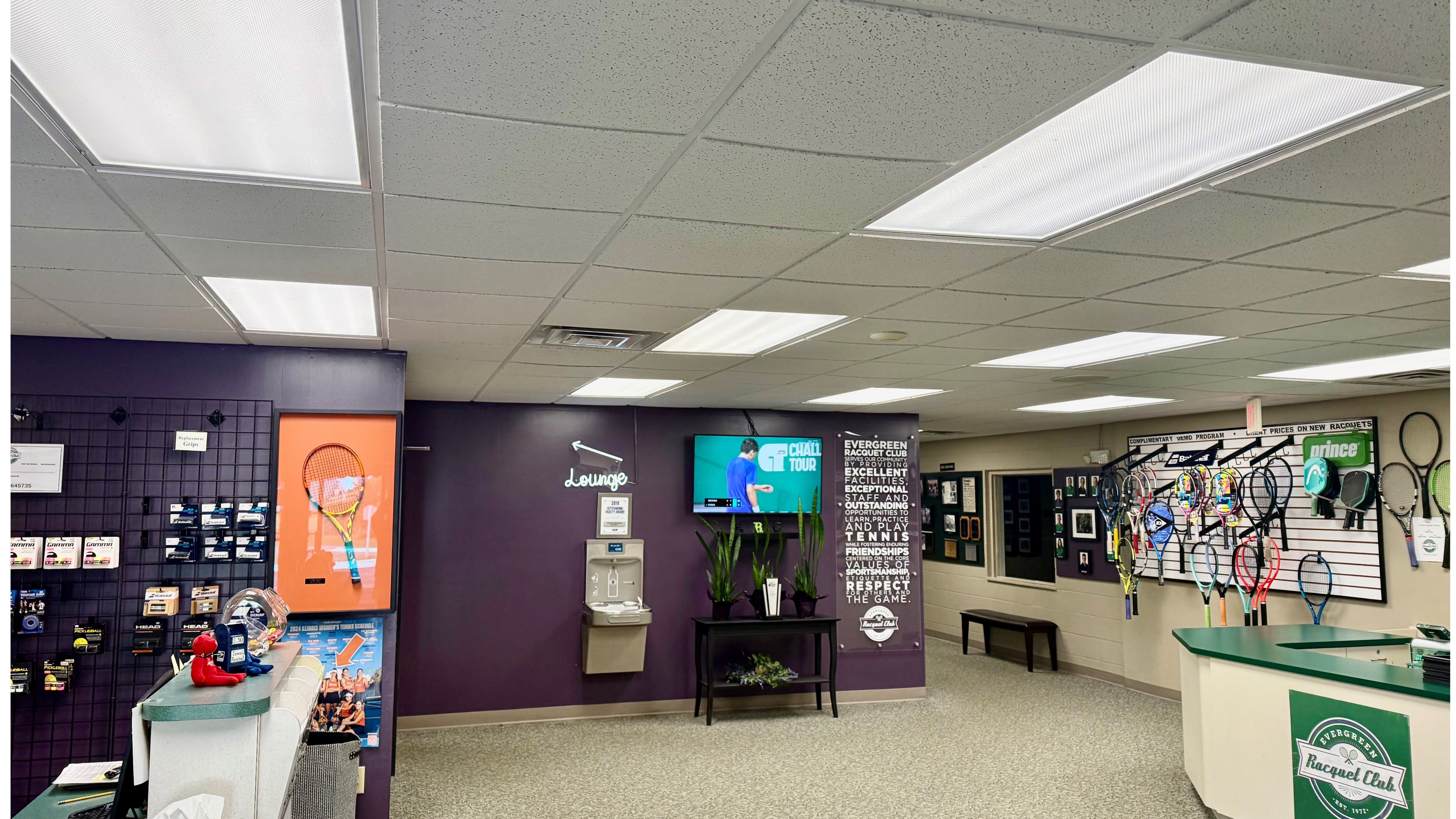
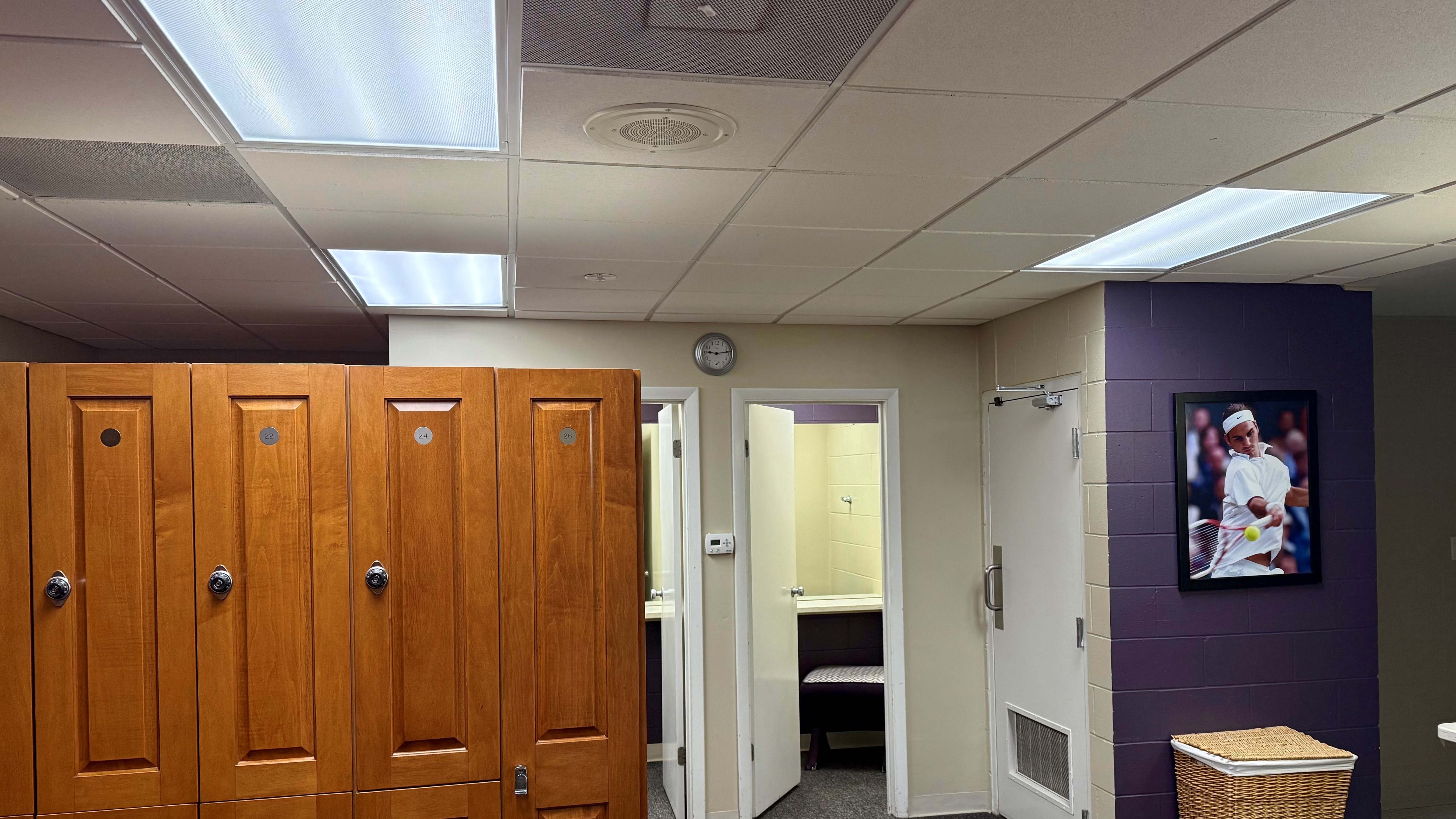
Evergreen’s upgrade helped brighten the offices, lobby and locker rooms, creating a more consistent environment throughout the facility. The common areas now better match the clean lighting members already experienced on the tennis and pickleball courts.
That is the human side of the project.
Better lighting is not only about visibility. It is about pride in the space. It is about making members feel welcome. It is about showing that the details around the game matter too.
For a community-centered club, those details are part of the relationship with members.
Sustainability that makes practical sense
For many local sports facilities, sustainability can feel like a big goal with a complicated path.
Evergreen’s project shows a more practical version.
By upgrading from fluorescent lighting to energy-efficient LEDs, Evergreen reduced lighting energy use in the common areas by up to 65%. That means lower energy consumption, less waste, and a smaller environmental footprint.
But the impact is not only environmental.
For a local club, lower operating costs can help protect the budget for the things members actually care about: programming, facility maintenance, staff, lessons, events, and future improvements.
That is what makes the project so meaningful.
Evergreen did not have to choose between improving the facility, supporting its members, and making a more sustainable decision. The LED upgrade allowed the club to do all three.
The project also saved more than $3,000 in LED product value and was completed at no cost to the club through Ameren Illinois Instant Rebates.
This is where smart facility leadership becomes powerful.
The best sustainability decisions are often the ones that also make operational sense. They reduce waste, lower costs, improve the environment, and strengthen the organization over time.
Making the upgrade easy to say yes to
Many facility leaders know there are improvements they would like to make. The harder part is finding the time, budget, and support to make them happen.
Lighting upgrades can be easy to delay because they are often assumed to be expensive, disruptive, or complicated.
For Evergreen Racquet Club, the process was different.
Through its McLean County Chamber of Commerce membership, Evergreen connected with OEO Energy Solutions and Ameren Illinois. Qualifying LED products were fully covered by Ameren Illinois Instant Rebates, with no bill to the club.
OEO handled the enrollment, logistics, rebate paperwork, shipping, and installation coordination.
The project was designed to be plug-and-play, with no rewiring required and no disruption to daily operations.
That part matters.
A facility upgrade should not interrupt the members it is meant to serve. Evergreen was able to improve the club while keeping the focus where it belonged: on the people using the facility every day.
As Colleen Curran shared:
“We are very thankful for OEO and the Chamber of Commerce for initiating and supporting this program! Not only is it helping us save in energy costs, but it has given us brighter common areas that match the clean lighting on our tennis and pickleball courts.”
A club that refused to dim its lights
Evergreen’s story stands out because the upgrade reflects a bigger mindset.
The club did not treat lighting as a small operational detail. It saw lighting as part of the member experience, part of the staff experience, part of the facility’s environmental impact, and part of responsible financial management.
That is what local sports facilities need more of.
Not every improvement has to be a major renovation. Not every sustainability project has to be complicated. Not every facility upgrade has to pull money away from members, programming, or maintenance.
Sometimes, raising the standard starts with making the spaces people already love feel brighter, cleaner, and more welcoming.
Evergreen’s LED upgrade supported the club on multiple levels:
A better experience for members
A brighter environment for staff
A more consistent facility feel
Lower energy use
Reduced operating costs
A smaller environmental footprint
No out-of-pocket cost for products or installation
No disruption to members or daily operations
That is practical leadership.
That is smarter facility thinking.
A model for local sports facilities
Evergreen Racquet Club is raising the standard by showing what thoughtful facility leadership can look like.
A brighter lobby can change how members feel when they arrive.
A better-lit locker room can improve comfort before and after play.
A more efficient building can reduce environmental impact.
A lower energy bill can help protect the club’s future.
For clubs, gyms, schools, nonprofits, municipalities, and community spaces, these decisions add up. They shape the experience people have inside the building. They affect the organization’s operating costs. They influence how sustainable the facility can become over time.
That is the mindset behind The Smarter Facility Series.
We are highlighting leaders and organizations that are making thoughtful facility decisions with real impact for their people, their operations, and their communities.
Evergreen Racquet Club shows that a smarter facility does not always require a massive renovation or a major budget increase.
Sometimes, it starts with refusing to let the spaces around the game fall short of the community being built inside them.
For Evergreen’s members, staff, and community, that means a brighter place to play, connect, and grow.